📦The Importing Guide 🌏
🧭 A Complete, Experience-Based Guide to Sourcing From China
👤About the Author✨
My name is Mobin Sajadi.I started working with China when I was 18 years old 🎓🌱.
At that time, I didn’t have a big company 🏢, a large team 👥, or deep capital 💰.
What I had was curiosity 🤔, ambition 🔥, and the willingness to learn from real experience 📚.
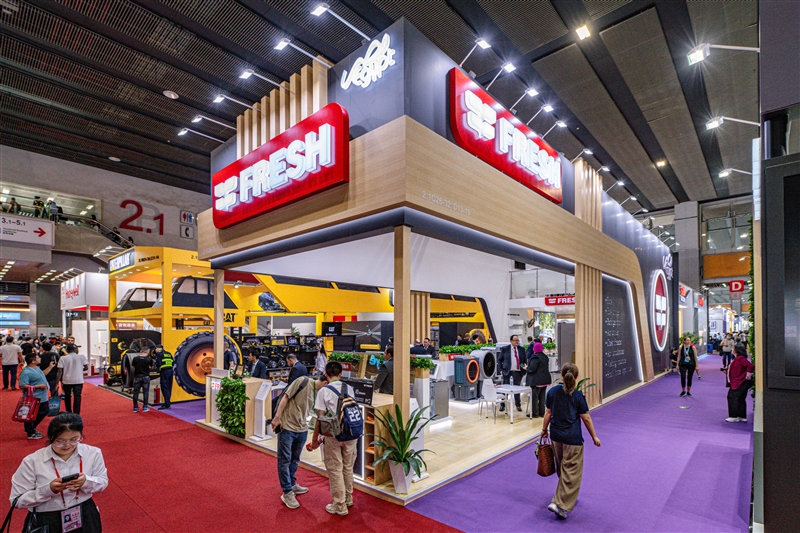
Just one year after starting, I found myself attending the Canton Fair 🏗️🌍 — the largest trade exhibitions in the world.
That was the moment when China stopped being just a “supplier country” and became a serious business ecosystem for me ⚙️📈.
Since then, I’ve worked directly with:
🏭 factories
📦 suppliers
🧾 trading companies
🚚 agents
🚢 shipping lines
I’ve made profits 📈, I’ve made mistakes ⚠️, and I’ve paid real money 💵 to learn real lessons.
This guide is not written from theory ❌📖.
It is written from what I personally did, tested, failed at, and succeeded in ✅.
🧭 Introduction: Why This Guide Exists📘
Importing from China is often shown as either:
The truth is neither.
Importing is actually simple ✔️
—but only if you learn it from someone who has:
🔁 gone through the process multiple times
🤝 dealt with real suppliers
⚠️ faced real risks
🛠️ and solved real problems
This guide exists to transfer experience, not motivation 🚫🎤.
Whether you want to:
💻 import online without traveling, or
✈️ travel to China and source in person,
this guide explains both paths step by step 🪜 so you can choose what fits you best 🎯.
🧩🔍 Step 1: Choosing the Right Product
Before talking about suppliers  , prices
  , or factories, you must be very clear about one thing:
 What exactly am I trying to source from China, and for what purpose?
Many people make the mistake of starting with:
“What product is trending?” 

Instead, you should start with:
 What market do I already understand?
 What kind of product can I realistically sell?
 Am I sourcing for resale, or for branding?
Why this matters 
China can produce almost anything  ,
,
in almost any quality  ,
,
at almost any price  .
.
Without clarity, you will:
Example 
If you already sell phone accessories  locally, sourcing phone holders or cables makes sense.
But jumping into industrial machinery without experience increases risk dramatically .
There are only two situations:
 Case 1: You Already Have a Product Idea
If you already know what you want to import, perfect 
That means you are clear about your direction 
Now your job is to:
Validate demand
Check competition 
Calculate margins 
Find the right supplier
In this case, continue reading below 
Case 2: You Don’t Have a Product Idea Yet 
If you don’t know what to import from China  but you are serious about starting a new business

Then your first mission is:
Product Discovery Mode ON 
You must actively search for trending products.
Where?
TikTok 
Instagram Reels
Amazon Best Sellers 
Facebook ads 
Viral Shopify stores
This is exactly what I did.
I found my first trending product — a portable CarPlay monitor 
 — on TikTok.
It was getting massive engagement 
Millions of views 
People were asking “Where can I buy this?” 
That was the signal  .
.
I imported it from China
I marketed it correctly 
And I made very good money from that product
You can do exactly the same.
But here is the important part
 Don’t just search for a trending product.
Search for a product you can advertise confidently.
Ask yourself:
Can I create content around this product?
Can I explain its benefits clearly? 
Can I show problem → solution? 
Can I sell it on Instagram or in my store?
Does it solve a real problem?
A trending product without marketing ability = wasted opportunity 
 Secret Source for Finding New Products
There is one app most beginners outside China don’t know about 
It’s called:
 Xiaohongshu (also known as RedNote)
New product launches
Prototype samples 
Early designs 
Domestic trending items
Factory showcases 
Sometimes products appear here before they even reach Alibaba 
Factory owners, product developers, and sourcing agents inside China use this app daily 
You can use it to:
Spot trends early 
Discover innovative products
See what Chinese consumers are buying
Find products before they go global
This gives you a timing advantage 
And in product business…
Timing = Profit
🏭🌐 Step 2: Finding Suppliers — In-Person vs Online
There are two main ways to source from China 🇨🇳.
Both work ✔️. Both are valid ✔️. But they are very different ⚖️.
The right choice depends on:
Let’s break them down clearly 👇
✈️🏢 Option A: Sourcing in Person
Sourcing in person requires:
💰 Higher cost (flights, hotels, translators, transport)
⏳ More time (planning, visa, travel days)
📋 More preparation (supplier research before arrival)
But what you get in return is powerful 👇
👉 Direct visibility and control 👀
👉 Faster trust-building 🤝
👉 Real product comparison ⚖️
🏢 Wholesale Markets & Exhibitions
Places like:
🏗️ Canton Fair
Thousands of factories 🏭.
Thousands of new products 🚀.
Direct factory representatives.
You can:
🚶♂️ Walk between suppliers
✋ Touch and test products
📦 See packaging quality
🗣️ Negotiate face-to-face
🤝 Build serious business relationships
🛒 Yiwu International Trade Market
It is perfect for:
🛍️ Small commodities
🎁 General products
🏠 Home items
🎀 Accessories
🎉 Low MOQ sourcing
You can compare 20 suppliers in one afternoon ⏳
That speed is impossible online.
🏙️ City-Specific Sourcing
China is specialized by city 🗺️.
Examples:
🔌 Shenzhen → electronics, gadgets, tech accessories
👕 Guangzhou → clothing & fashion
🧸 Yiwu → small commodities
🏭 Foshan → furniture
When you visit the right city, you are entering the core supply chain of that industry 🔥
Best when:
🎯 You already know your product
🏭 You want direct factory access
📦 You plan large volume orders
🤝 You want long-term partnerships
💎 You care deeply about quality control
⚠️ Reality Check
In-person sourcing is powerful — but expensive.
If you don’t know what you are looking for, you may:
❌ Waste your trip
❌ Get overwhelmed
❌ Make emotional decisions
Travel is an accelerator — not a substitute for preparation.
💻📦 Option B: Online Sourcing
This is how most professionals start and scale 📈🔥
It is:
💰 Low cost
⚡ Fast
🌍 Accessible from anywhere
📦 Scalable
You don’t need to fly to China to start.
You need clarity and process.
🛒 Alibaba Platform
Millions of suppliers.
Thousands of factories.
Almost every product category.
And I’ll tell you something important 👇
👉 I exactly started with Alibaba.
At that time, I couldn’t afford to travel to China — not even for a 3-day trip ✈️💸.
No flight.
No hotel.
No exhibition visit.
So I used Alibaba 💻.
And inside Alibaba, I found one of the best factories I could ever find — even if I had traveled in person.
That’s the reality.
You don’t need to be physically in China to build strong supplier relationships.
If you know how to search, filter, communicate, and negotiate properly,
you can build powerful partnerships completely online 🤝🔥
Why Alibaba is Powerful:
On Alibaba you can:
👀 View detailed product listings
📸 See real product images
💬 Chat directly with suppliers
💰 Negotiate prices
🎯 Request discounts
📦 Place orders
🔐 Use Trade Assurance (escrow protection)
⚖️ Open disputes if necessary
📍 Track your order
📊 Compare multiple suppliers easily
Always choose suppliers with:
✅ Verified badge
✅ Trade Assurance
✅ 3+ years history
✅ Good response rate
✅ Product specialization
Do not just choose the cheapest price ❌💸
Cheap often means lower quality or hidden problems.
🧠 So Which One Should You Choose?
If you are:
💡 Beginner → Start online
📦 Testing product → Start online
💰 Low budget → Start online
If you are:
🏭 Scaling business
📦 Ordering large volumes
🤝 Building long-term factory partnerships
🌏 Expanding product line
Then visiting China becomes powerful 🚀
Professional importers usually do this:
1️⃣ Start online
2️⃣ Test product
3️⃣ Build supplier relationship
4️⃣ Then visit factory later
That is the smart progression model 📈🔥
🏗️⚖️ Step 3: Factory vs Supplier — A Realistic View
Many beginners say:
“I only want to buy from factories.” 🏭🔥
It sounds smart.
It sounds professional.
It sounds cheaper.
But the reality is different ⚠️
🏭 Factories
Factories:
🧵 Produce in bulk
🏗️ Focus on manufacturing
🎨 Great for private labeling & branding
📦 Usually require high MOQ
🛠️ Better for custom production
⏳ Longer production timelines
Factories are powerful — but they are built for scale.
Their mindset is:
👉 Large volume
👉 Stable clients
👉 Long-term contracts
If you want 100–300 pieces only, many factories are not interested.
And even if they accept, they may:
❌ Increase price
❌ Reduce service quality
❌ Delay small orders
❌ Prioritize bigger customers
Factories care about production efficiency — not beginner flexibility.
📦 Suppliers (Trading Companies / Wholesalers)
Suppliers:
📦 Buy massive volumes from factories
🔽 Offer lower MOQ
💰 Often provide similar pricing
⚡ Faster response
📊 Handle multiple product categories
📞 Usually better at communication
Suppliers act as middle operators between factory and buyer.
Because they purchase in large quantities, they already get factory pricing advantages.
So when you buy smaller quantities from them, the price difference is often minimal.
In exchange, you get:
✔️ Flexibility
✔️ Lower risk
✔️ Faster negotiation
✔️ Smaller starting capital
For beginners, flexibility is more important than saving $0.30 per unit 💰
📌 Conclusion: What Most Beginners Don’t Understand
Suppliers are often more practical and safer for beginners.
Here’s why 👇
When you are starting:
💰 Your capital is limited
📦 Your order quantity is small
📊 You are testing the market
🎯 You are validating demand
In this phase, your biggest risk is not paying $1 extra per unit.
Your biggest risk is:
❌ Ordering too much
❌ Choosing the wrong product
❌ Getting stuck with unsold inventory
❌ Cash flow problems
Suppliers reduce these risks.
They allow you to:
🔄 Test smaller quantities
📉 Lower your financial exposure
⚡ Move faster
📦 Switch products easily if needed
Factories become powerful when:
📈 You already validated the product
📦 You are scaling volume
🎨 You want custom molds or packaging
🏭 You need full production control
But in the beginning?
Flexibility > Factory pride.
Smart importers don’t chase the word “factory.”
They chase margin, safety, and scalability 📈🔥
And sometimes, the supplier gives you all three.
🔍🛡️ Step 4: Trust & Verification
Trust is everything 🤝.
In international trade, you are sending money 💵 across borders 🌍 to a company you may have never met.
This is not shopping.
This is investment.
And the first rule of investment is:
🛡️ Protect your principal capital.
Profit comes second.
Security comes first.
Because once capital is lost, growth stops.
🏢 In Person Verification
When you source in person, verification is much stronger:
👀 See the office
👷 See production lines
🏭 Check factory size
📊 Understand scale of operation
📦 Inspect warehouse inventory
🗣️ Meet managers face-to-face
You can observe:
Are workers actually producing?
Is machinery active?
Does the factory look organized?
Are there quality control stations?
Body language, professionalism, environment — all give you data.
Scammers cannot fake a real industrial production line easily.
Physical presence reduces fraud risk dramatically.
🌐 Online Verification
When sourcing online, verification becomes even more important.
Because now:
You are wiring money 💸
To a company
In another country
Based on digital communication.
Scammers exist everywhere 🌍 — not just in China.
They exist in every country.
Your responsibility is risk detection and avoidance.
Step 1: Platform-Level Verification
If using platforms like:
🛒 Alibaba Group
✅ Verified supplier badge
✅ Trade Assurance available
✅ Years in business (minimum 3+ recommended)
✅ On-site check or third-party audit
✅ Transaction history
These are first-level filters.
They don’t guarantee safety —
but they eliminate obvious scams.
Step 2: Company Identity Verification
You must confirm the company is real.
Request:
📄 Business license (营业执照)
📄 Company registration certificate
📍 Factory address
📞 Official phone number
🌐 Official website
Then verify:
Does the company name on the license match Alibaba profile?
Does bank account name match company name?
Is the address real on Google Maps or Baidu Maps?
🚨 Never send money to a personal bank account.
Always pay to:
🏢 Registered company account
or
🔐 Platform escrow (Trade Assurance)
Step 3: Visual Proof of Factory
Request real-time proof.
Ask for:
📸 Factory interior photos
🎥 Production line videos
🎥 Packing process video
📦 Warehouse inventory footage
📹 Live video call walkthrough
Important:
Ask them to:
👉 Write your company name on paper
👉 Hold it inside the factory
👉 Record a custom video for you
Scammers usually reuse internet photos.
Custom video proof makes fraud much harder.
Step 4: Behavioral Analysis
Pay attention to behavior.
Red flags 🚩:
❌ Extremely low prices
❌ Urgent payment pressure
❌ Refusing video call
❌ Bank account different from company name
❌ Poor communication consistency
❌ Avoiding detailed questions
Professional factories behave professionally.
Scammers rush.
Real companies build relationships.
💬🤝 Step 5: Communication & Negotiation
Negotiation is not difficult —but it has a culture 🌏.
If you don’t understand the culture, you may:
❌ Get ignored
❌ Get higher prices
❌ Lose priority
❌ Damage long-term relationships
Chinese business culture values:
🤝 Respect
📈 Long-term cooperation
🧠 Professional behavior
💬 Clear communication
Negotiation is not fighting.
It is positioning.
📱 Platforms 💬
You will usually communicate through:
🛒 Alibaba Chat
💚 WeChat (main Chinese messenger)
📱 WhatsApp
✉️ Email
Each has a purpose.
📱 WeChat
WeChat is not just a messenger.
In China, it is:
💬 Personal chat
🏢 Business communication
📎 File sharing
📆 Daily coordination
💰 Payment integration
📹 Video calls
Chinese suppliers live on WeChat ⏰📱.
If you are serious about importing, you must use it.
It increases:
⚡ Response speed
🤝 Relationship depth
📦 Order coordination efficiency
Always Ensure:
📸 Screenshots are possible
🧾 Agreements are documented
📄 Important details are confirmed in writing
📅 Production timelines are clearly stated
Never rely on voice messages only.
Always confirm important agreements in text.
Example:
“Just to confirm: 1,000 units, $3.20 per unit, 20 days production, FOB Shenzhen.”
Clarity prevents disputes.
💰 Pricing Reality
First price ≠ Final price ❌
The first price is usually:
Suppliers don’t know you yet.
They don’t know:
📦 Your future volume
🔁 Your reorder potential
📈 Your growth plan
So they protect themselves.
Better Price Comes With:
📦 Volume
🔁 Continuity
🤝 Trust
📊 Professional communication
If you ask:
“What is your best price?” ❌
You look inexperienced.
Instead say:
“If we order 1,000 units monthly, what price can you offer?”
Now you are speaking long-term language.
Factories reward predictable buyers.
🧑💼 Introduce Yourself Properly
Many beginners just say:
“Hi, price?”
That is weak positioning ❌
Instead, introduce yourself like a serious buyer.
Include:
🧑💼 Who you are
🏢 Your business name
🌍 Your market
📊 Your sales channel
📱 Your social media (if relevant)
📦 Your estimated volume
Example positioning:
“We are an online retailer in the UAE market focusing on automotive accessories. We are currently testing this product with planned monthly orders if performance is strong.”
Now you sound:
✔️ Professional
✔️ Scalable
✔️ Worth prioritizing
Suppliers prioritize buyers who look long-term.
🎯 Negotiation Strategy Mindset
Negotiation is not about pushing price to the lowest point.
It is about balancing:
💰 Price
⭐ Quality
⏳ Production time
📦 MOQ
🚚 Shipping terms
Sometimes:
Paying $0.20 more
For better quality
With faster production
Is smarter than saving money.
Cheap problems are expensive later.
📌 Golden Rule
In Chinese business culture:
Relationship first.
Transaction second.
If suppliers trust you, they will:
📉 Offer better pricing
⚡ Speed up production
📦 Fix problems faster
🎁 Add small bonuses
Build the relationship —
and negotiation becomes easier over time.
🧪🔬 Step 6: Samples — Non-Negotiable
Never skip samples ❌
Never trust photos only 📸
Never rely on promises only 🗣️
A sample is your first real inspection.
You can:
🏠 Test yourself
🧑💼 Test via sourcing agent
🔍 Use third-party inspection
🔄 Compare multiple suppliers side-by-side
Always check:
⭐ Build quality
📦 Packaging
🎨 Finishing details
⚙️ Functionality
🧾 Accuracy vs description
Photos can lie.
Videos can hide defects.
Samples reveal truth.
📑🧾 Step 7: Proforma invoice & Packing List
After you:
✔️ Find the product
✔️ Choose the supplier
✔️ Negotiate price
✔️ Approve samples
Now you are ready to place the order 📦💰
But before sending money, you need two essential documents.
These are not optional.
They protect you legally and financially 🛡️.
📄 Proforma Invoice (PI)
This is your pre-order contract.
It must include:
📦 Product details (model, specifications, color)
🔢 Quantity
💰 Unit price
💵 Total amount
📍 Incoterms (FOB / EXW / CIF etc.)
🏦 Supplier bank details
⏳ Production time
📆 Validity date
The Proforma Invoice is required for:
💳 Payment processing
🏦 Bank transfer
📊 Internal accounting
⚖️ Dispute reference
Never send money without an official stamped PI 🏢.
The company name on the PI must match:
🏢 Business license
🏦 Bank account name
If names don’t match — stop 🚨
📦 Packing List (PL)
This document shows shipment details.
It must include:
📦 Number of cartons
⚖️ Gross weight
⚖️ Net weight
📏 Carton dimensions
📊 Total CBM (Cubic Meter)
🏷️ Shipping marks
The Packing List is required for:
🚚 Freight forwarder booking
🛃 Customs clearance
📦 Warehouse handling
📊 Shipping cost calculation
Shipping companies calculate price based on:
⚖️ Weight
📏 Volume (CBM)
If this data is wrong, you may:
❌ Pay extra shipping
❌ Face customs delays
❌ Experience cargo problems
📌 Important Reminder
This is international trade 🌍.
Everything must be documented.
Verbal agreement = zero protection ❌
Written document = legal reference ✅
Your money travels before your goods.
So documentation protects your capital 🛡️💵
🚢🚚 Step 8: Shipping Methods & Agents 🌍
After payment 💳
After production 🏭
After documents 📑
Now comes logistics.
Two things must be decided:
1️⃣ Shipping Method
2️⃣ Logistics / Freight Agent
They work together 🤝
🚢 Shipping Methods
Your shipping choice depends on:
📦 Product type
⚖️ Weight
📏 Volume (CBM)
⏳ Urgency
🌍 Destination country
✈️ Air Freight
Best for:
⚡ Urgent shipments
📦 Small quantity
💎 High-value products
🧪 Test orders
Fast but expensive 💰
🚢 Sea Freight
Best for:
📦 Large orders
⚖️ Heavy cargo
📏 High CBM
📉 Lower cost per unit
Slow but cheapest for bulk 💰
🚆 Rail Freight
Best for:
🌍 Europe / Central Asia routes
⚖️ Medium volume
💰 Mid-range cost
Faster than sea 🚢
Cheaper than air ✈️
Only available for specific routes.
🤝 Logistics Agents (Freight Forwarders)
Agents handle:
🚢 Shipping booking
🛃 Customs clearance
📦 Final delivery
📑 Export coordination
You provide documents.
They handle complexity 🧠➡️🛠️
Good agent = lower stress + fewer mistakes.
🌍 Choose Based on Your Region
Asia
If you are in Asia You have advantages:
⏳ Shorter transit times
💰 Lower shipping cost compared to US/EU
🚢 Strong sea freight routes
✈️ Very fast air options
For most Asian countries:
Small order → ✈️ Air
Growing volume → 🚢 Sea
Nearby countries → Sometimes express courier (DHL / FedEx) is practical
Because distance from China is shorter, logistics is usually smoother.
Middle East
Small order → ✈️ Air
Large order → 🚢 Sea
Always use experienced freight agent.
Europe
Urgent → ✈️ Air
Large volume → 🚢 Sea
Mid-size → 🚆 Rail is strong option.
USA / Canada
Small test → ✈️ Air
Scaling → 🚢 Sea
Use licensed customs broker.
📌 Final Strategy
Testing phase → ✈️ Air
Scaling phase → 🚢 Sea
Regional flexibility → 🚆 Rail
And always:
✔️ Compare freight quotes
✔️ Verify CBM & weight
✔️ Calculate total landed cost
✔️ Work with experienced agent
Shipping is not just transport.
It directly affects:
💰 Your profit margin
📦 Your delivery speed
📊 Your competitiveness
Choose strategically. Not emotionally.
🛡️📦 Step 9: Packaging (Blocking)
Bad packaging = loss ⚠️
International shipping is not gentle.
Your cargo may face:
🌧️ Rain
🌊 Sea storms
💧 Humidity
📦 Heavy stacking
🚢 Container pressure
🏗️ Rough handling
From factory → truck → port → ship → customs → warehouse.
If packaging is weak, damage is guaranteed sooner or later.
And damaged goods = lost profit 💸
🛡️ What Good Packaging Means
Good packaging:
🛡️ Protects products from impact
💧 Protects from moisture & humidity
📦 Prevents carton crushing
🔒 Secures goods during movement
💰 Saves money long-term
Always confirm:
📦 Double-layer export cartons
📏 Proper carton thickness
🧴 Waterproof inner protection (plastic wrap)
🪵 Palletization if necessary
🧷 Corner protection for fragile goods
For sea shipping especially 🚢:
Humidity control is critical.
You can request:
🧴 Desiccant bags
📦 Plastic wrapping
🪵 Wooden pallet blocking
💡 Professional Rule
Product quality matters.
But packaging protects the investment.
You are not shipping products.
You are shipping money in physical form 💵📦
Protect it properly 🛡️🔥
⏳🚢 Step 10: Shipping & Waiting
After everything:
✅ Order placed
✅ Payment completed
✅ Production finished
✅ Documents ready
✅ Agent assigned
Now your cargo begins its journey 🌍
This is the phase where many beginners feel nervous.
But this is normal.
International trade takes time.
🚚 What Happens Now?
Your goods move through:
🏭 Factory pickup
🚛 Local transport to port
🛃 Export customs clearance
🚢 International transit
🛃 Import customs clearance
🚛 Final delivery
Multiple checkpoints.
Multiple authorities.
Multiple handling stages.
Patience is part of importing ⏳
🚢 Shipping Methods Recap
Your shipment will move by:
✈️ Air (fast, higher cost)
🚢 Sea (slow, lowest cost for bulk)
🔀 Combined / Multimodal (sea + truck / rail + truck)
Each has different timelines.
Air → usually 5–12 days
Sea → usually 20–45 days
Combined → depends on route
Always plan your inventory based on realistic transit time.
Late planning = stock problems ⚠️
🤝 Role of the Agent
Your freight agent should:
📍 Provide tracking updates
📦 Confirm vessel departure
📆 Inform estimated arrival
🛃 Coordinate customs
🚛 Arrange final delivery
Agent updates you until delivery 📦📍
Stay in communication.
But don’t panic if there are small delays.
Weather 🌧️
Port congestion 🚢
Customs inspections 🛃
These are normal in global trade.
📌 Professional Mindset
After shipment leaves the factory:
Your job is:
📊 Prepare marketing
📦 Prepare warehouse
💰 Prepare cash flow
📣 Prepare sales plan
Smart importers sell before goods even arrive.
Waiting time should be productive time ⏳🔥
🏁✨ Final Words
Importing from China is not difficult.
But it must be learned from experience — not assumptions 🧠❌
China is not luck 🍀
It’s a system ⚙️
And now — you understand that system ✅
You know:
🎯 How to choose the right product
🏭 How to find and verify suppliers
💬 How to negotiate properly
🧪 Why samples are non-negotiable
📑 What documents protect you
🚢 How shipping works
🛡️ How to protect your capital
There is nothing hidden anymore.
No mystery.
No confusion.
No guessing.
I have taught you everything you need to start.
Now the only difference between you and a real importer is action 🚀
Do not overthink.
Do not wait for the “perfect moment.”
Do not wait for more confidence.
Confidence comes from execution.
Start small if you need to 📦
Test smart 🧠
Protect your money 🛡️
Scale step by step 📈
Every big importer once placed their first order.
Now it’s your turn.
Start.